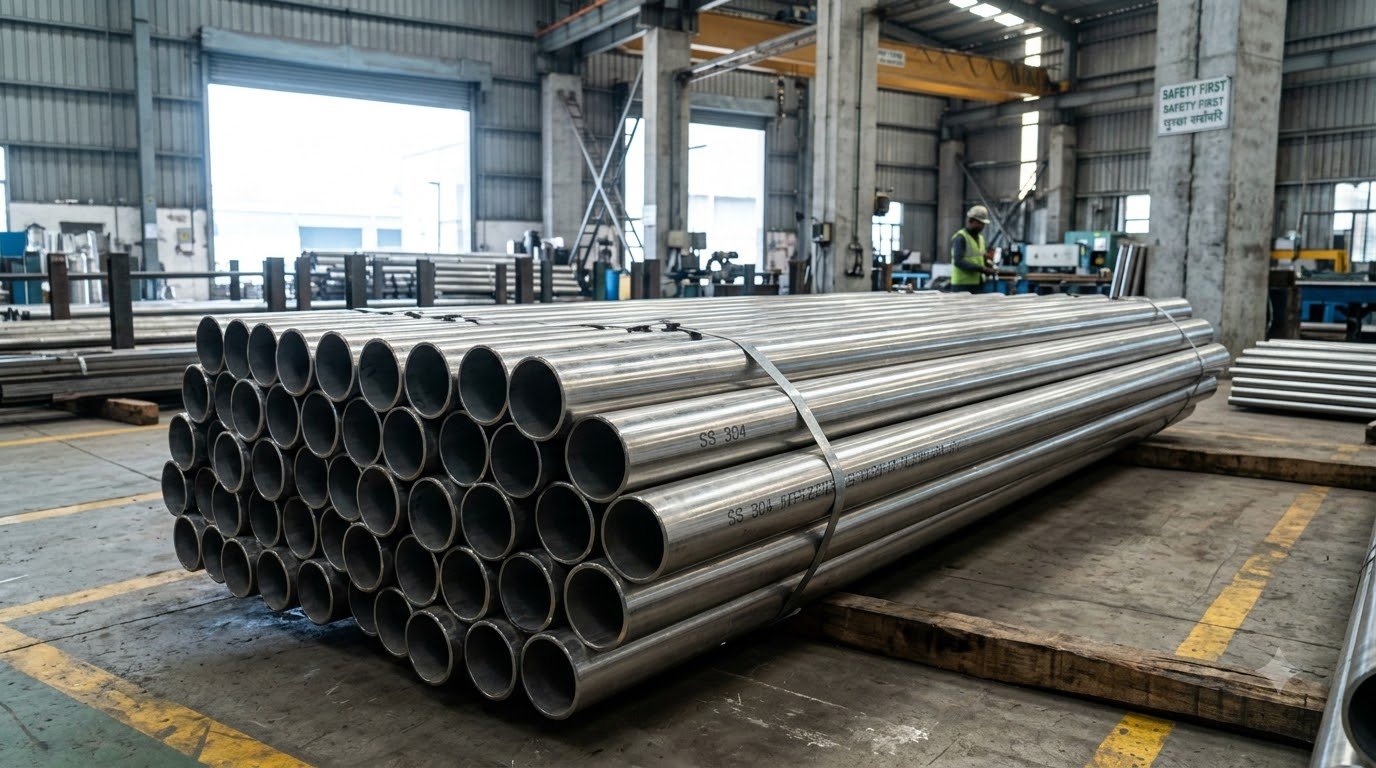

SS 304 pipe is a stainless steel pipe made from grade 304, an austenitic alloy with about 18 to 20 percent chromium and 8 to 10.5 percent nickel. It resists rust and corrosion, is easy to clean and weld, and is the most widely used stainless steel pipe grade in the world.
Buyers across Haryana, Delhi NCR and North India ask for it in food plants, dairies, hospitals, hotels, railings, water lines and architectural projects. But “304” alone is not a full specification. Standard, finish, wall thickness and seamless or welded construction all affect price and performance. This guide covers what you need to know before you request a quote.
Stainless steel gets its corrosion resistance from chromium. When chromium meets oxygen, it forms a thin, invisible oxide layer on the surface that protects the steel underneath, and heals itself if scratched.
Grade 304 is part of the 300 series of austenitic stainless steels (chromium-nickel alloys). It is not magnetic in its annealed state, bends and forms easily, and welds well, with or without filler metal.
| Element | Typical Range |
|---|---|
| Chromium (Cr) | 18.0 to 20.0% |
| Nickel (Ni) | 8.0 to 10.5% (some specifications allow up to 11%) |
| Carbon (C) | 0.08% max |
| Manganese (Mn) | 2.0% max |
| Silicon (Si) | 1.0% max |
Values vary slightly between standards, so always check the mill test certificate for the actual heat analysis.
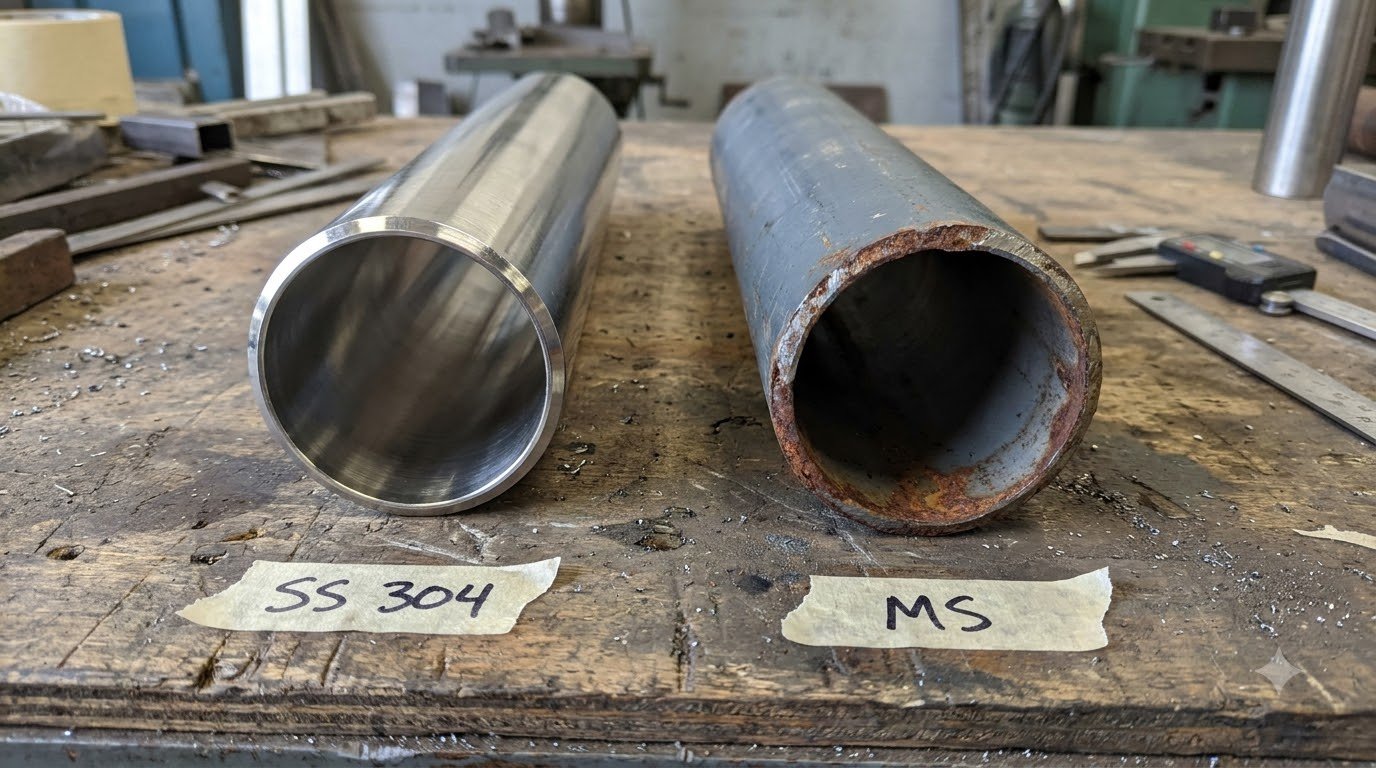
Limitation: 304 is not the best choice for marine or chloride-heavy environments. In those, 316 stainless, which contains molybdenum, performs better. See our companion guide on SS 304 pipe vs MS pipe .
304L is the low-carbon version, with carbon limited to 0.035% max (versus 0.08% for 304). Lower carbon reduces the risk of carbide precipitation during welding, which can weaken corrosion resistance at the weld. Many mills supply dual-certified 304/304L. If your project involves heavy welding, specify 304L or dual certification.
Ask your supplier which standard the pipe is made to, and request a test certificate. ASTM A312 specification page
Choose by pressure, safety needs and budget, not just by price.
For comparison with other profiles, read our overview of types of steel pipes and their industrial applications .
Give your supplier these details so you get an accurate quote:
Use our “bulk steel pipe order checklist to avoid costly mistakes, and review what affects steel pipe pricing. For SS 304, nickel and chromium prices are a major cost driver.
It is made from grade 304 stainless steel, an alloy of iron with about 18 to 20 percent chromium and 8 to 10.5 percent nickel.
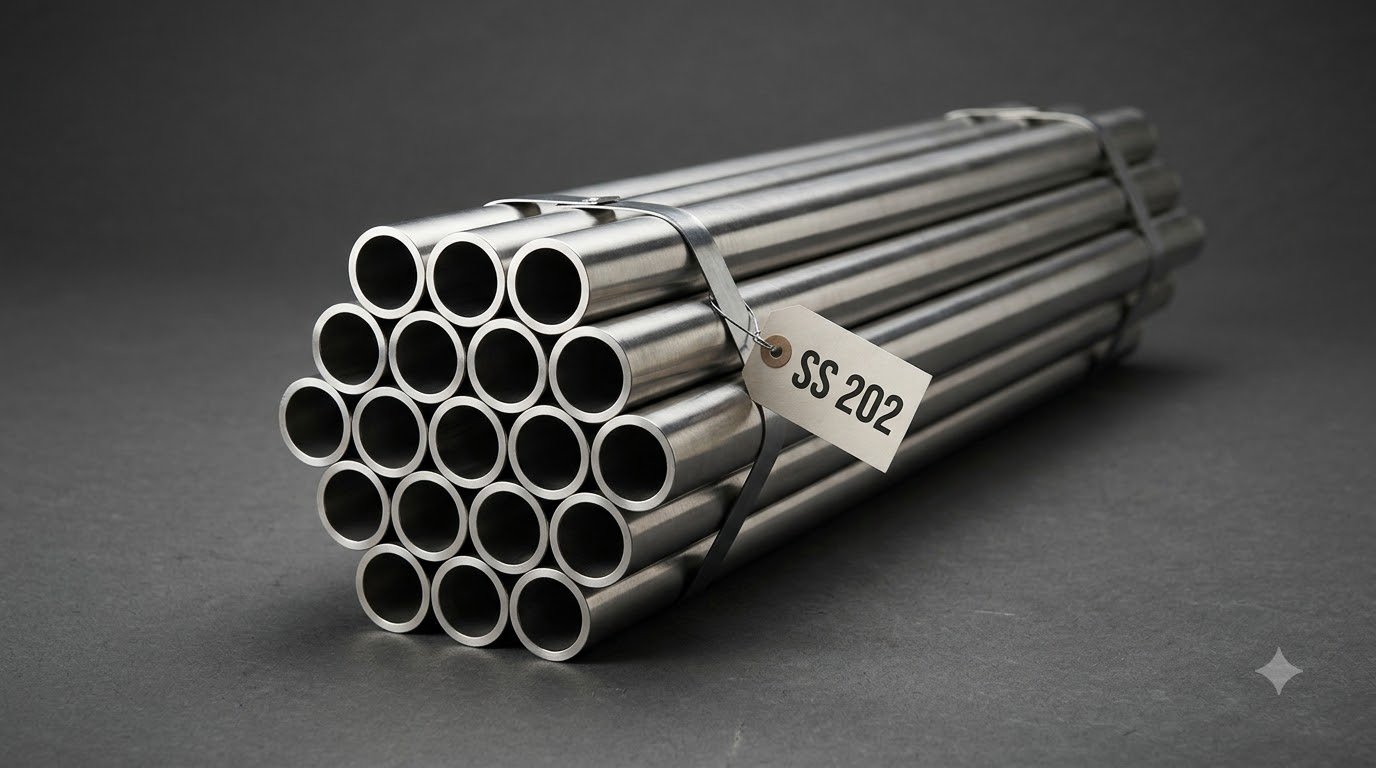
SS 304 has more nickel and chromium, so it resists corrosion better. SS 202 has more manganese and less nickel, which makes it cheaper and strong enough for most general uses.
In its annealed state, it is non-magnetic or only very slightly magnetic. Cold working can make it slightly magnetic, which does not mean the grade is wrong.
It is not the first choice for food-grade or potable use. 304 and 316 are preferred where strict hygiene and corrosion rules apply. Check local standards before you decide.
ASTM A312 is the most common standard for seamless and welded industrial pipe. Decorative and structural tubes often follow other standards, so confirm with your supplier.