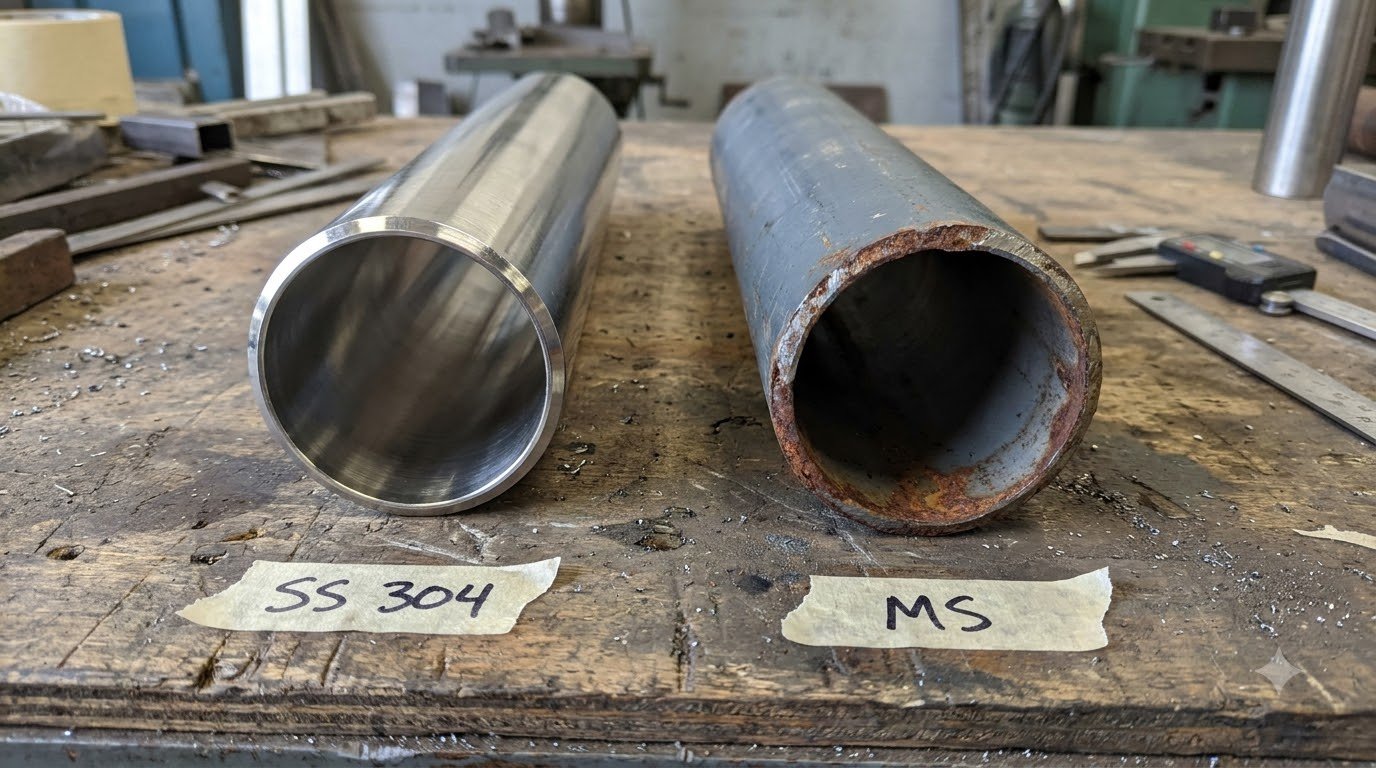

SS 304 pipe is stainless steel that resists rust on its own and needs almost no upkeep, but costs more upfront. MS (mild steel) pipe is cheaper and easy to fabricate, but it rusts unless it is painted, coated or galvanised. Choose SS 304 where corrosion, hygiene or appearance matter. Choose MS where budget and structural strength matter most.
Contractors and fabricators across Haryana and Delhi NCR face this decision on every project, whether it is a railing, a water line, a factory frame or a food unit. The cheaper pipe is not always the cheaper choice over ten years. This guide compares the two so you can decide with confidence.
MS pipe is made from low-carbon steel. It is strong, easy to cut and weld, and affordable. But its surface reacts with moisture and oxygen, so it rusts without protection.
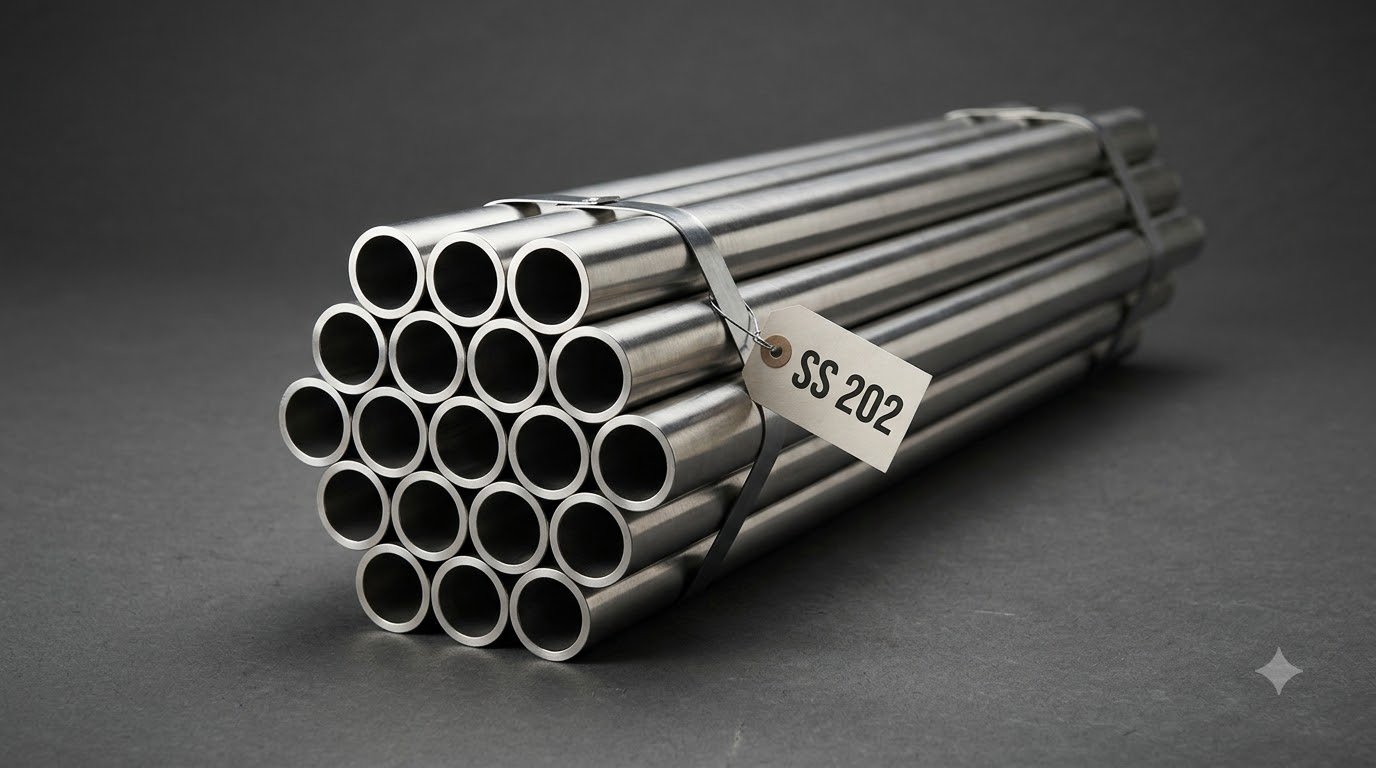
SS 304 pipe is made from stainless steel with roughly 18 to 20 percent chromium and 8 to 10.5 percent nickel. The chromium forms a thin protective layer on the surface, which gives it built-in corrosion resistance. For the full grade breakdown,
| Factor | SS 304 Pipe | MS Pipe |
|---|---|---|
| Corrosion resistance | High (built-in) | Low unless coated or painted |
| Upfront cost | Higher | Lower |
| Maintenance | Minimal | Regular painting or coating |
| Appearance | Bright, clean, modern | Needs paint or finish |
| Hygiene | Easy to sanitise | Needs coating for hygiene use |
| Weldability | Good, with correct procedure | Very good, easy |
| Typical use | Food, pharma, railings, water, architecture | Structures, frames, scaffolding, general fabrication |
SS 304 costs more per kg because of the nickel and chromium content. MS costs less to buy. But MS pipe in a damp or outdoor location needs repainting, recoating or even replacement. Over a long period, maintenance costs can narrow the gap.
Think in terms of lifecycle cost: purchase price, fabrication, coating, maintenance and replacement. For indoor, dry, painted structures, MS often wins. For wet, hygienic or visible applications, SS 304 often wins.
Both pipes are strong enough for most building and fabrication jobs, and strength depends on grade, wall thickness and shape. For heavy structural frames, trusses and supports, MS pipe is the standard and economical choice. SS 304 is used structurally where corrosion or appearance is a priority, such as exposed façades and handrails.
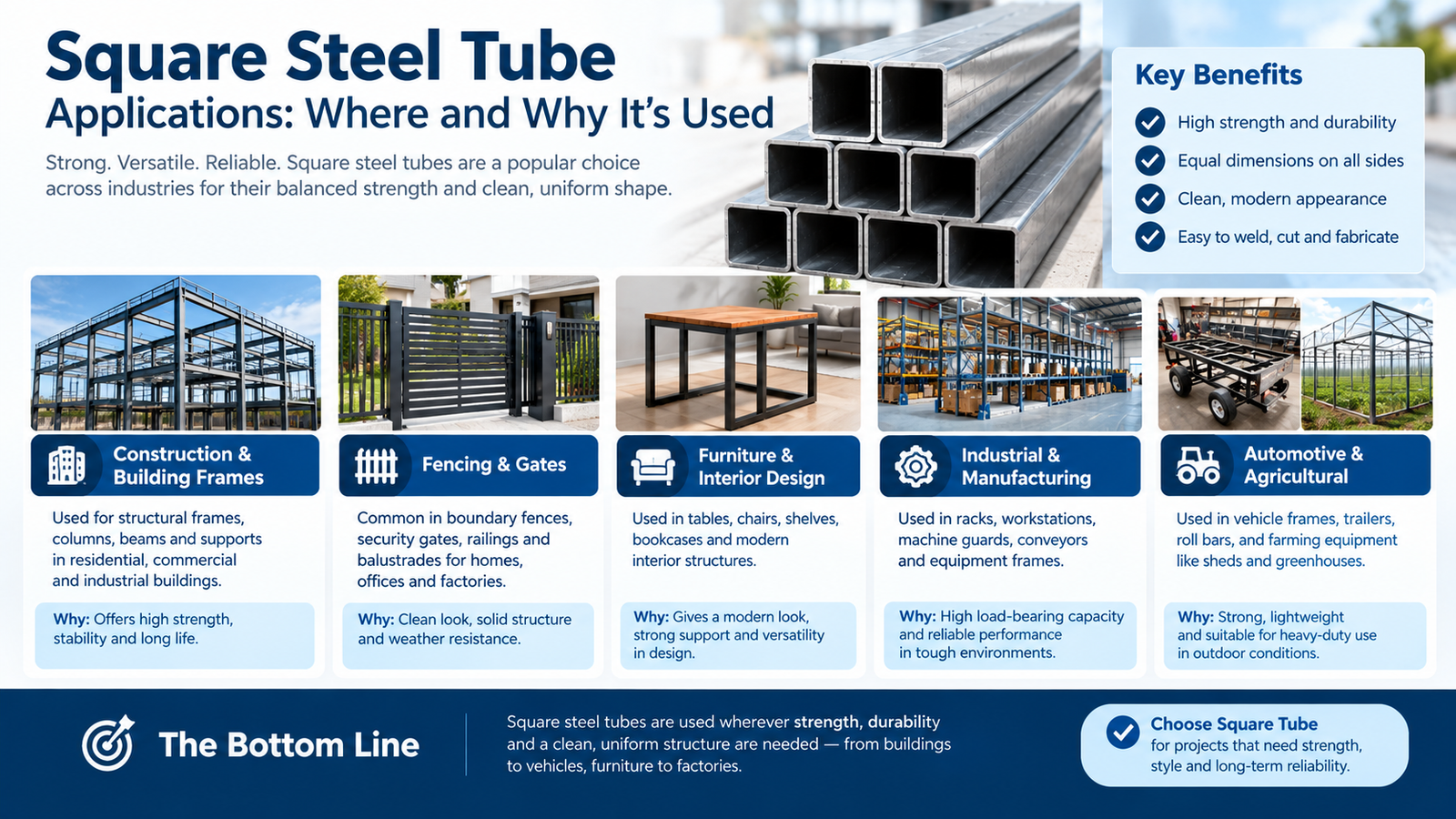
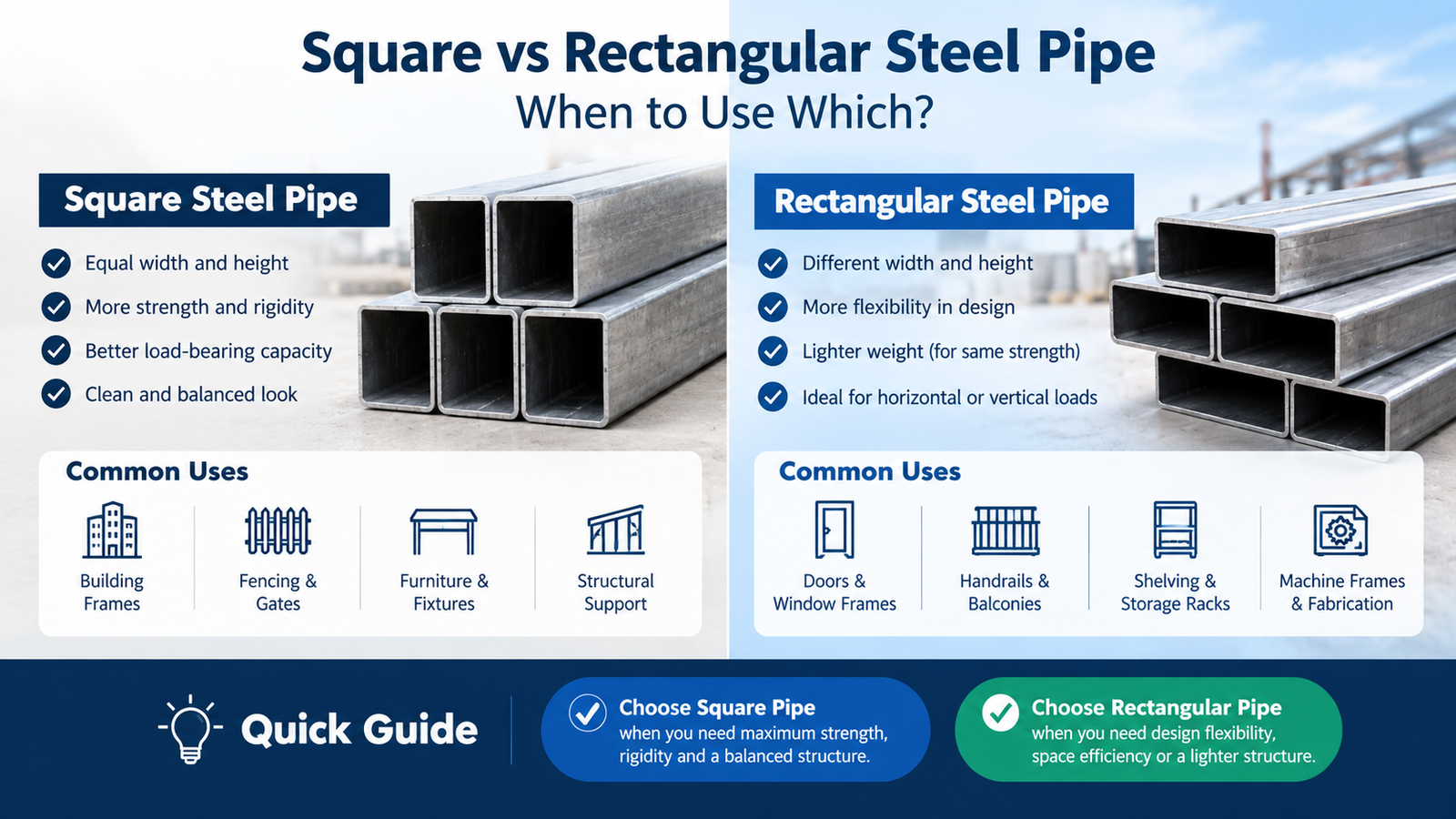
Shape matters too. Read our comparison of rectangle vs square steel pipe to choose the right profile.
MS is the easier material to cut and weld, and most workshops handle it routinely. SS 304 welds well too, but needs the right filler, clean tools and care to keep the weld corrosion resistant. Using carbon steel tools on stainless can leave particles that later cause rust marks. If your project involves heavy welding, ask about 304L, the low-carbon version
Choose SS 304 for:
Choose MS for:
Consider Both:
Many projects use MS for the hidden structure and SS 304 for exposed or wet sections. This balances cost and durability.
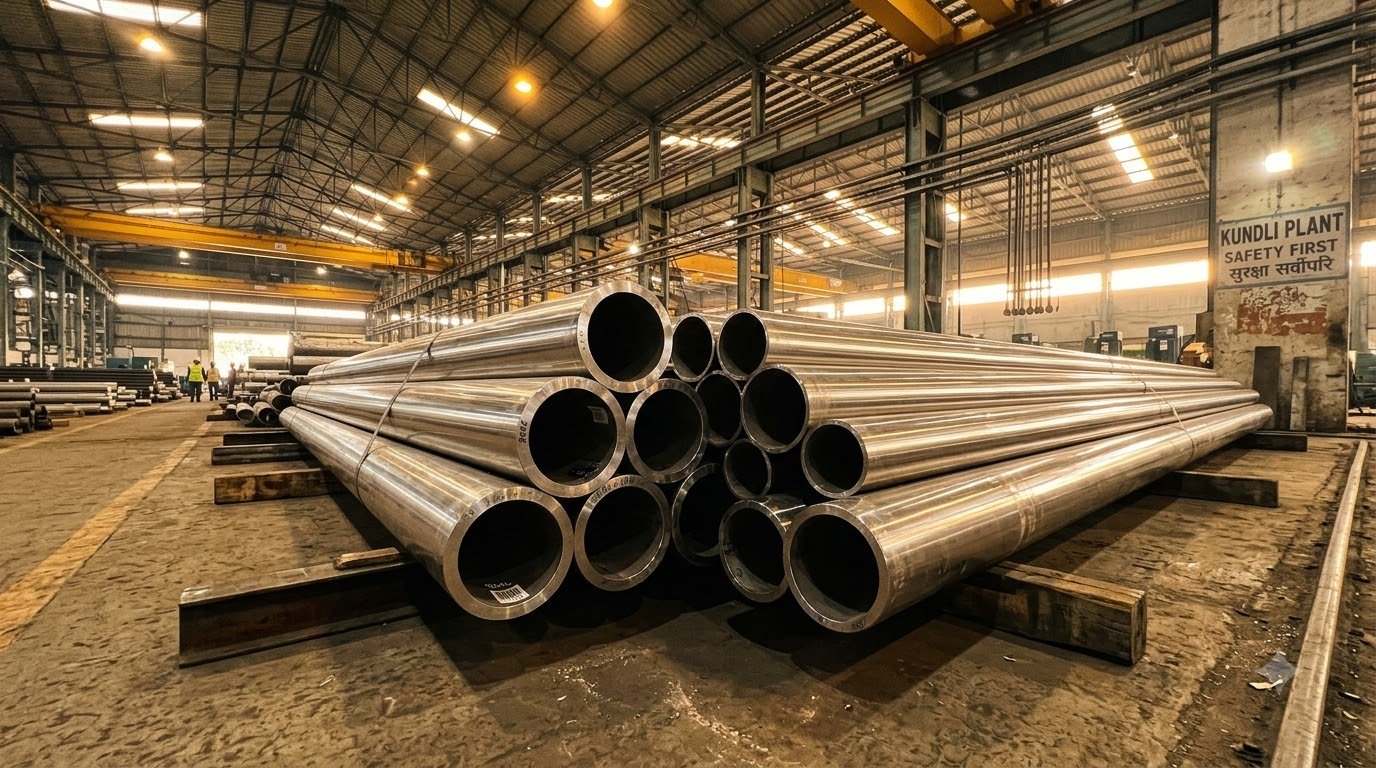
Steel Star by Karauli Steel manufactures steel pipes at its plant in HSIIDC Industrial Estate, Kundli, Sonepat, Haryana, serving builders, contractors and industries.
It depends on the job. SS 304 is better for corrosion resistance and hygiene. MS is better for low cost and heavy structural use.
It contains nickel and chromium, which cost more than plain steel. These alloys give stainless its corrosion resistance.
Yes. Without paint, galvanising or another coating, MS pipe rusts when exposed to moisture and air.
It is possible with the correct filler metal and procedure, but dissimilar welds need expert handling and can corrode at the joint. Ask a qualified welder or engineer.
SS 304 is a popular choice for exposed railings because it resists rust and needs little maintenance. In coastal areas, consider 316.
Tell us about your application, size and quantity, and our team will guide you. Contact Steel Star by Karauli Steel .