Square vs Rectangular Steel Pipe: When to Use Which
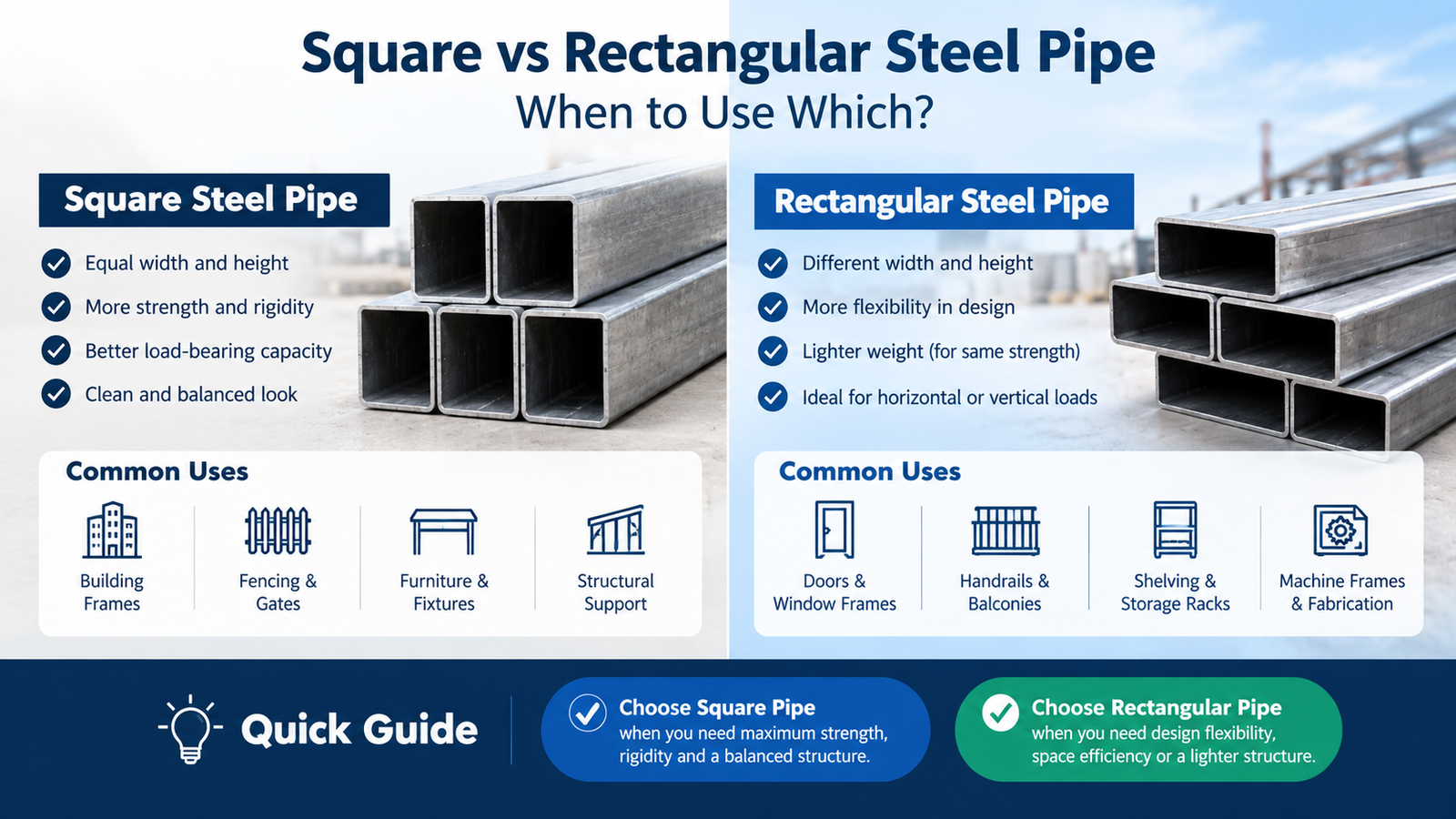
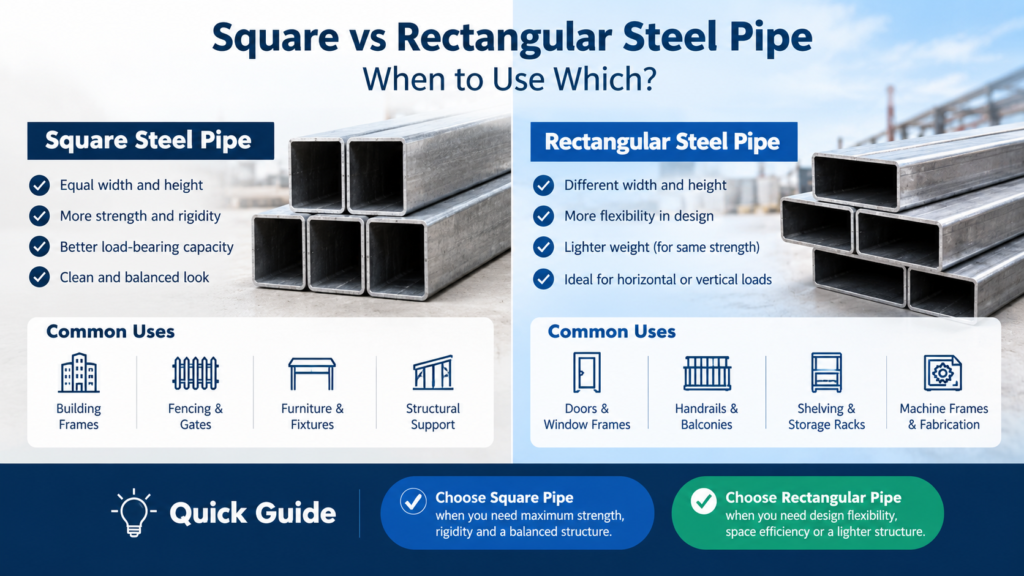
Use square steel pipe when the load can come from any direction or is mainly compressive, such as posts, columns, gate frames, furniture and general fabrication. Use rectangular steel pipe when the load comes mainly from one direction, such as beams, purlins, joists, trusses and long spans, with the longer side set in the direction of the load.
That one rule covers most decisions. The rest of this guide explains why it works, so you can choose confidently for your own project.
What Are Square and Rectangular Steel Pipes?
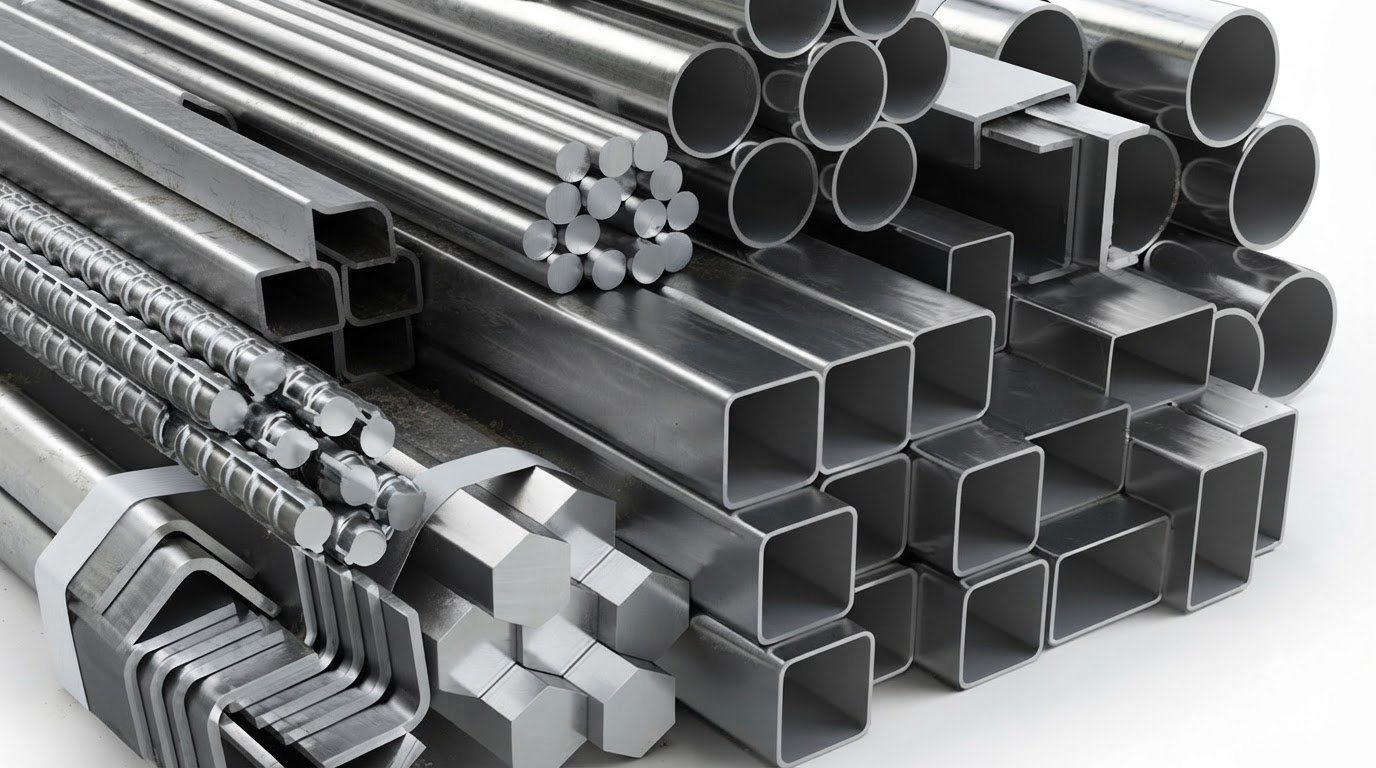
Both are hollow structural sections: closed, four-sided steel tubes with flat faces and rounded corners. They are widely used in construction, engineering, furniture and fabrication because they are strong for their weight and easy to cut, weld and bolt.
The only real difference is the cross-section:
- Square pipe: all four sides are equal, for example 50 x 50 mm.
- Rectangular pipe: two sides are longer than the other two, for example 100 x 50 mm.
That small change in shape changes how the pipe behaves under load.
The Core Idea: Strength Depends on Direction
A tube resists bending according to how far its material sits from the centre line in the direction of the load. Engineers call this the moment of inertia, and for a rectangle it grows with the cube of the depth. In plain terms: a deeper section is much stiffer against bending.
- A square pipe has the same depth in both directions, so it resists bending equally on both axes.
- A rectangular pipe is much stiffer along its longer side and noticeably less stiff along its shorter side.
Stand a rectangular pipe on its long edge and it carries far more load without bending. Lay it flat and it behaves much more like a lighter section. That is why orientation matters with rectangular pipe, and why it is rarely a good idea to use it where the load direction is unpredictable
When to Use Square Steel Pipe
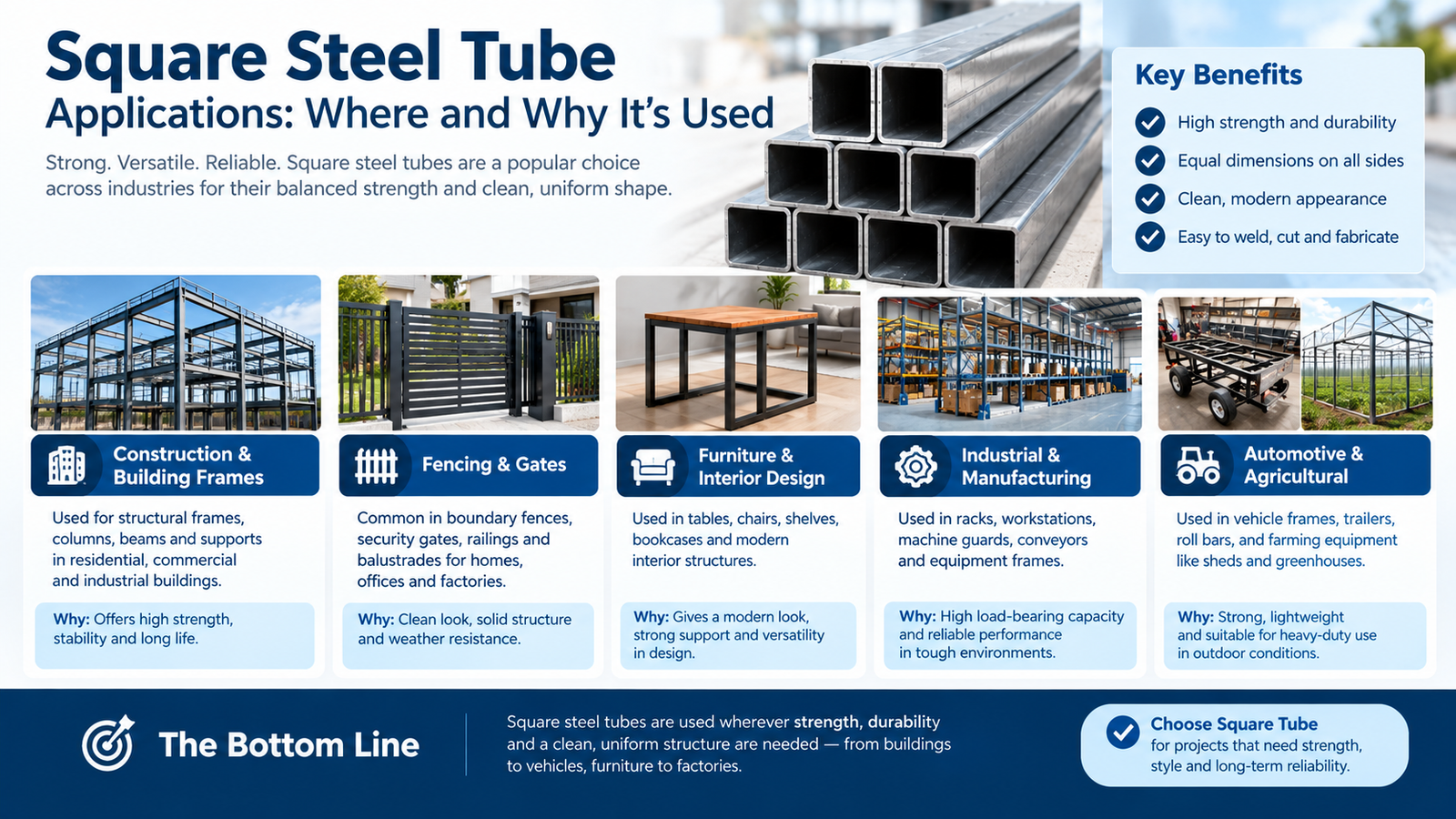
Choose square pipe when you need balanced performance and simple, neat construction.
1. Columns, posts and vertical supports
Vertical compression is spread evenly, and a square section resists buckling the same way in both directions. It suits pillars, sign posts, pergola posts and shed columns.
2. Frames loaded from different directions
Gates, grills, window guards, machine frames and racks all see loads from several angles. Square pipe handles this without needing a “correct side up.”
3. Furniture and interior work
Tables, chairs, benches, shelving and display units benefit from the clean, symmetrical look and easy corner joints.
4. General fabrication
Square pipe is forgiving. Cut it, weld it and use it either way round. It is a practical choice for workshop jobs and repeat designs.
5. Railings and decorative structures
Matching profiles on posts and rails give a consistent finished look.
When to Use Rectangular Steel Pipe
Choose rectangular pipe when you know exactly where the load comes from and want more strength without adding more steel.
1. Beams, joists and lintels
The long side stands vertically, giving high bending resistance for the weight of steel used.
2. Purlins and roof supports
Rectangular sections span the gap between main frames efficiently and carry roof sheeting and wind load.
3. Trusses
Top and bottom chords and long members in trusses benefit from the stiffness of a deeper section.
4. Long spans
Bridges for walkways, mezzanine floors, platforms and equipment supports often need to cross open space with as little sag as possible.
5. Vehicle and trailer frames
Chassis rails and cross members generally carry loads in a known direction, which suits rectangular tube.
6. Architectural features
Canopies, cantilevers, staircase stringers and facade frames often use rectangular sections where the design calls for a slimmer look with high stiffness.
Square vs Rectangular Pipe: Quick Comparison
| Square Pipe | Rectangular Pipe | |
|---|---|---|
| Cross-section | Equal sides | Two longer, two shorter sides |
| Bending strength | Equal in both directions | Much higher along the longer side |
| Best load type | Vertical or multi-directional | Mainly one direction |
| Orientation matters? | No | Yes |
| Typical uses | Posts, columns, gates, furniture, frames | Beams, purlins, trusses, long spans, chassis |
| Fabrication | Simple, symmetrical joints | Needs care in orientation |
| Material efficiency | Good all-rounder | Excellent when loaded correctly |
Other Factors to Consider
Span length
The longer the span, the more it pays to use a deeper rectangular section. For short spans, square pipe is often enough.
Wall thickness
Thickness changes strength as much as shape does. A thicker-walled square pipe can outperform a thin-walled rectangular one in some cases, so always compare the actual section properties, not only the outer size.
Weight and cost
Steel is typically priced by weight, so the lighter section that safely does the job is usually the most economical. A properly oriented rectangular pipe often carries a beam load with less steel than a square one.
Joints and appearance
Square pipe makes neat, symmetrical corner joints. Rectangular pipe can look sleek and modern, but joints and orientation need more planning.
Corrosion and finish
Both can be supplied for painting, powder coating or galvanising. Choose the finish based on where the structure will stand, indoors or outdoors, and how long it needs to last.
Standards and quality
For structural work, specify pipe made to the applicable Indian standards, and confirm dimensions, wall thickness and tolerances with your supplier or structural engineer before ordering.
A Simple Decision Guide
Ask yourself these questions:
- Is the load mostly vertical (compression)? Choose square.
- Does the load come from several directions? Choose square.
- Is it a beam, purlin or long horizontal member? Choose rectangular, with the longer side facing the load.
- Do you need maximum stiffness with minimum weight? Choose rectangular.
- Is it a decorative or furniture piece? Choose square for simplicity, rectangular for a slimmer look.
- Is it a heavy or safety-critical structure? Ask a structural engineer to confirm the section.
Common Mistakes to Avoid
- Laying a rectangular pipe flat where it should stand on edge, which wastes its strength.
- Choosing by outer size only and ignoring wall thickness.
- Using square pipe for long spans and adding extra steel to fix sagging.
- Over-specifying, which adds weight and cost with no real benefit.
- Skipping the engineer on load-bearing or public-use structures.
Square and Rectangular Pipes from Steelstar
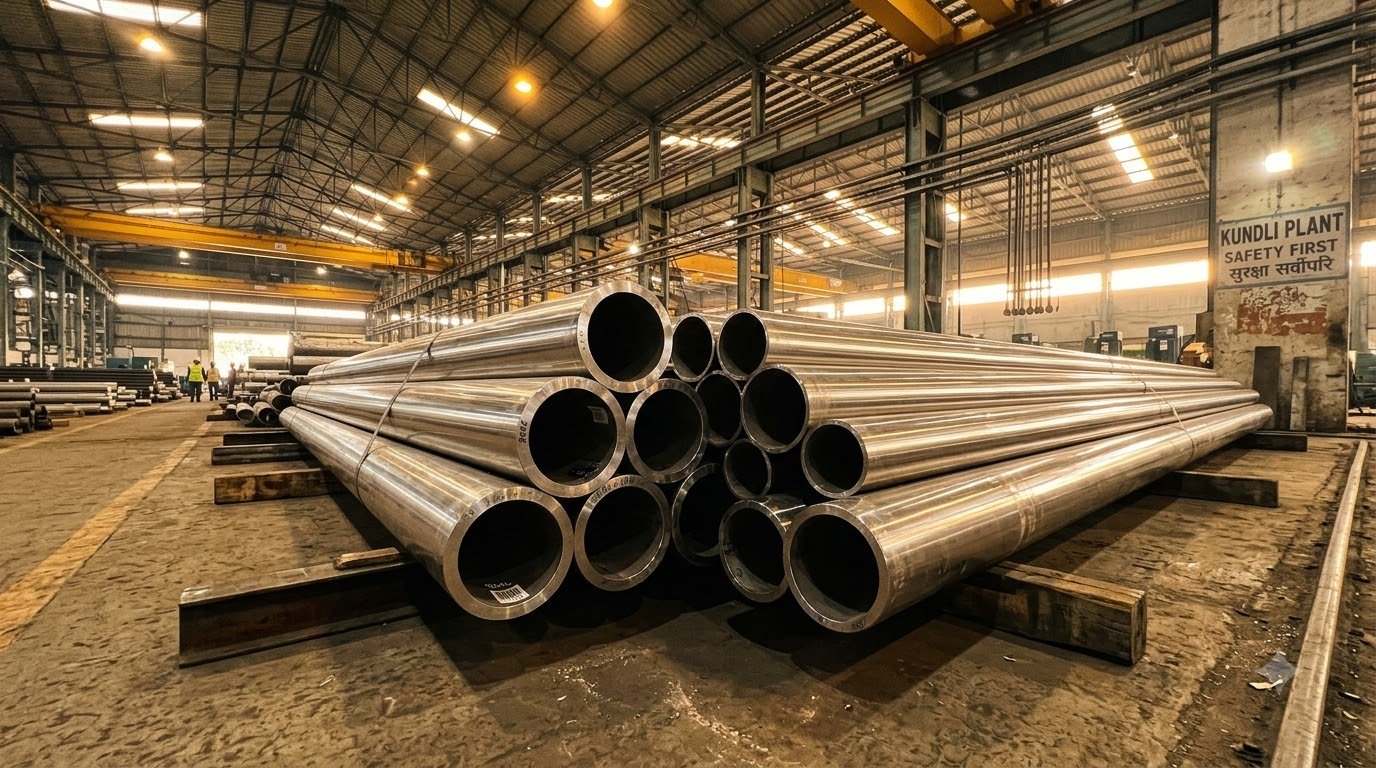
Steelstar by Karauli Steel manufactures round, square, rectangular and oval pipes for construction, infrastructure, industrial and engineering applications. Our square and rectangular pipes are made for strength, durability and ease of fabrication, and we also support customised requirements.
Explore more:
- Our Products
- Applications in Construction and Infrastructure
- Quality Assurance
- Plants and Machinery
- More Steel Guides on Our Blog
Relevant Bureau of Indian Standards page or an authoritative reference on hollow structural sections
Frequently Asked Questions (FAQs)
Q1. Is square pipe stronger than rectangular pipe?
Neither is stronger in every case. Square pipe is equally strong in both directions, while rectangular pipe is much stronger along its longer side. Rectangular wins for beams, and square wins when load direction varies.
Q2. Which pipe is better for a gate or grill?
Square pipe is usually the better choice for gates and grills because the frame sees loads from different directions and the symmetrical profile gives neat joints.
Q3. Which pipe should I use for a roof purlin?
Rectangular pipe is usually preferred for purlins because it spans efficiently when the longer side is set vertically. Confirm the size with a structural engineer based on span and roof load.
Q4.Does orientation matter for rectangular pipe?
Yes. Setting the longer side in the direction of the load gives the best bending strength. Turning it on its side greatly reduces stiffness.
Q5. Is rectangular pipe more expensive than square pipe?
Price is mainly driven by weight and wall thickness, not shape. The cheapest option is the lightest section that safely meets the load requirement.
Get in Touch
Planning your next construction order? Reach out to our team for the right guidance You can find our website on google
Steel Star by Karauli Steel
📞 +91 93111-11154
📍 148, HSIIDC PHASE-II, Industrial Estate, Kundli, Sector-53 Sersa, Sonepat, Haryana
Latest Post